The instrument
Morin khuur: the horsehead fiddle
What the morin khuur is made of, how it is played, the legends behind it and why UNESCO lists Mongolia's two-stringed horsehead fiddle.
Book the Ulaanbaatar show ↗Two strings and a horse head
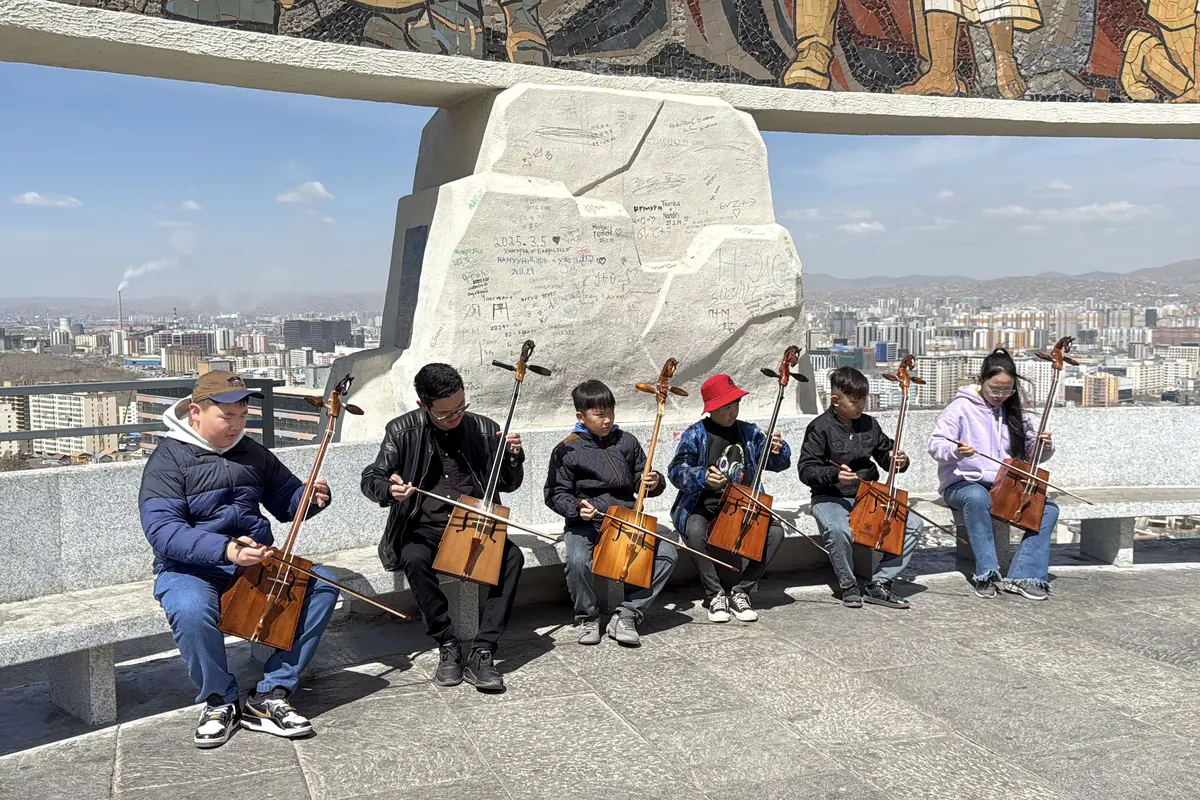
The morin khuur is a two-stringed bowed fiddle. UNESCO describes a hollow, trapezoid-shaped body on a long fretless neck, with a carved horse head at the top and two tuning pegs sticking out below it like ears. The soundboard is covered in animal skin, and the strings and the bow are made of horsehair. The sound comes from sliding or stroking the bow across the two strings, which is why a good player can make it sound like a voice.
Mongolia's national instrument
The morin khuur is one of the most important instruments of the Mongol people and is considered a symbol of the nation. Many Mongolians keep one at home as a sign of peace and happiness. In Mongolian the name means horse fiddle. In western Mongolia the instrument is known as the ikil, and in the east as the shoor. UNESCO proclaimed its traditional music in 2003 and inscribed it on the Representative List in 2008.
Older than it looks
UNESCO notes that string instruments adorned with horse heads appear in written sources from the Mongol empire of the thirteenth and fourteenth centuries. That places the horse-headed fiddle in the written record of the Mongol empire. The design is tied to the cult of the horse, which sits at the centre of nomadic life, and the fiddle was part of rituals and everyday tasks as well as a musical instrument.
Two legends
Two stories explain the horse head. In one, a shepherd called Namjil the Cuckoo was given a flying horse, which he rode at night to see the woman he loved. A jealous woman cut off its wings, the horse fell and died, and the grieving shepherd made a fiddle from its skin and tail hair. In the other, a boy called Sükhe made the first fiddle after a wicked lord killed his white horse and the horse's spirit told him to, so the two would not be lonely.
How it is held and bowed
The player holds the instrument nearly upright, with the sound box in the lap or between the legs. The bow is held from underneath, in an underhand grip, and the hand can tighten the loose horsehair as it plays, which gives fine control over tone. The neck is fretless, and the left hand stops the strings by pinching them with the fingers. That is why the tone can bend and slide between notes in a way a fretted instrument cannot copy.
What it plays
The morin khuur is mainly a solo instrument, but it also accompanies dances, long songs, mythical tales, ceremonies and everyday tasks tied to horses. Part of the repertoire is tatlaga, tunes meant to tame animals. At Naadam, players perform praise songs for the finest horse and the top wrestler. That range matters in a mixed programme: the same fiddle may carry a slow song, a dance, and a tune that imitates a horse.
Read next: Urtiin duu: the Mongolian long song
From the steppe to the stage
UNESCO points to a change that matters to anyone hearing the instrument in a hall. Most Mongolians now live in towns, far from the fiddle's historical setting. On stage the instrument is often tuned for performance, which makes it higher and louder and erases some subtle shades of tone. Herding communities in southern Mongolia still keep many older ways of playing and the customs around them. What you hear in a theatre is a real tradition, adapted for a room.
Listening in the hall
Watch the bow arm and the horse head together. In a folk programme the morin khuur may play alone first, then join a singer or a dance. Listen for the way notes slide into each other, which is the main thing a fretted instrument does not do. If more than one fiddle plays, a larger bass version, the ikh khuur, may add depth beneath them. Nothing about the instrument requires expertise to enjoy; the sound is easy to like on first hearing.
Sources